
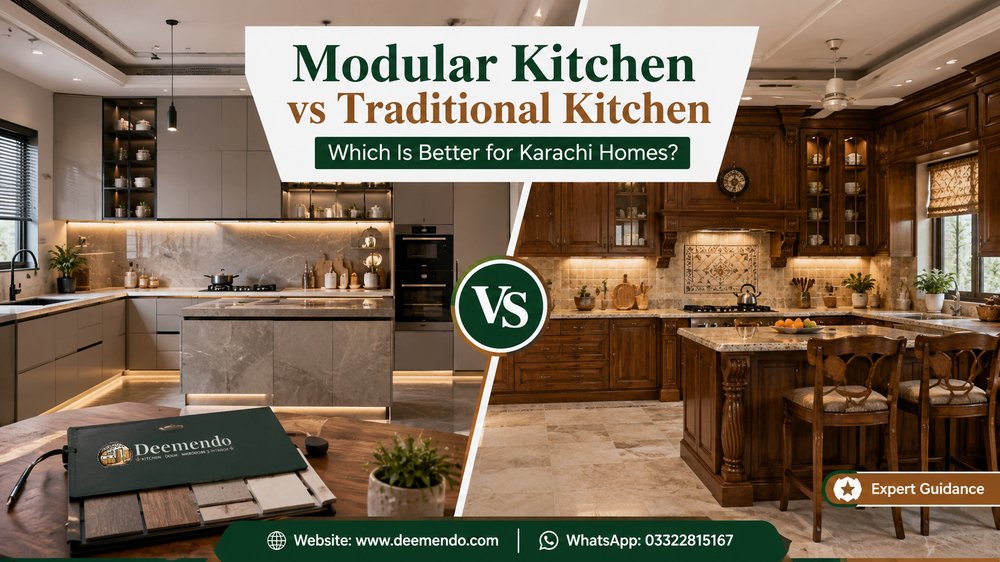
Choosing between a modular kitchen and a traditional kitchen is an important decision for homeowners who want better storage, smoother workflow, and a stylish cooking space. When comparing Modular Kitchen vs Traditional Kitchen, the right option depends on your home layout, budget, lifestyle, material preference, design expectations, and long-term maintenance needs.
Modular Kitchen vs Traditional Kitchen: Why the Choice Matters
A kitchen is one of the most used areas of any home. It should support cooking, storage, cleaning, movement, and daily family routines without feeling crowded or difficult to manage. The difference between a modular kitchen and a traditional kitchen can affect how easily you organize utensils, groceries, appliances, cookware, and cleaning items.
For Karachi homes, kitchen planning is especially important because many apartments and houses require smart use of space. A well-designed kitchen can improve comfort, save time, enhance the interior look, and increase the overall value of the home.
What Is a Modular Kitchen?
A modular kitchen is designed with pre-planned cabinet units, drawers, shelves, shutters, hardware, and storage modules that are customized according to the available space. These units are made to fit the kitchen layout and provide organized storage with a clean modern appearance.
Modular kitchens are popular in modern homes because they offer better space utilization, flexible storage, attractive finishes, and easier maintenance. They can be designed in different layouts such as straight, L-shaped, U-shaped, parallel, or island-style kitchens depending on the room size.
Key Benefits of Modular Kitchens
- Smart storage: Cabinets, drawers, and compartments are planned for daily kitchen items.
- Modern design: Clean lines, premium finishes, and stylish surfaces create a polished look.
- Better organization: Dedicated sections help separate utensils, groceries, appliances, and cookware.
- Space-saving layout: Useful for compact kitchens and apartment spaces.
- Easy access: Drawer systems and cabinet divisions make daily cooking more convenient.
- Flexible customization: Materials, colors, finishes, and internal fittings can be selected according to the home style.
What Is a Traditional Kitchen?
A traditional kitchen is usually built on-site using fixed carpentry, masonry, or standard cabinet structures. It often follows a more conventional design approach, where storage and work areas are created according to the available space and builder’s method.
Traditional kitchens can be strong and practical when made with good materials and skilled workmanship. They may suit homeowners who prefer a classic look, heavy construction, or a simpler storage setup. However, they may not always offer the same level of flexibility, internal organization, or modern finishing as a well-planned modular kitchen.
Key Benefits of Traditional Kitchens
- Familiar design: Many homeowners are comfortable with the classic kitchen structure.
- Strong construction: Good workmanship can provide long-lasting use.
- Simple planning: Suitable for basic kitchen layouts and standard storage needs.
- Classic appearance: Works well in homes that prefer a more traditional interior style.
- On-site flexibility: Adjustments can sometimes be made during construction.
Storage and Organization Comparison
Storage is one of the biggest differences between the two kitchen types. A modular kitchen is planned with specific storage zones, such as drawers for cutlery, deep cabinets for pots, tall units for groceries, overhead cabinets for crockery, and sections for appliances.
A traditional kitchen may offer storage space, but it often depends on basic shelves and cabinets. Without careful internal planning, items can become difficult to access, especially in corners and deep cabinets.
If your main concern is organized storage and easy daily use, a modular kitchen usually provides better results. If your storage needs are simple and you prefer a classic setup, a traditional kitchen can still work when designed properly.
Design and Style Differences
Modular kitchens are known for sleek and modern design. They offer a wide range of finishes, including matte surfaces, glossy panels, wood textures, laminate finishes, glass-style shutters, and handleless designs. This makes them suitable for homeowners who want a premium and updated kitchen appearance.
Traditional kitchens can also look elegant, especially when designed with quality woodwork, classic panels, or simple cabinet finishes. However, they may require more detailed planning to achieve a clean and modern look.
Popular Modular Kitchen Design Features
- Soft-close drawers and shutters for smooth daily use.
- Tall pantry units for grocery organization.
- Corner solutions for better space usage.
- Built-in appliance sections for a neat appearance.
- Modern cabinet finishes that match the home interior.
- Under-counter and overhead storage for maximum capacity.
Budget and Long-Term Value
Budget is an important factor when choosing between modular and traditional kitchens. A traditional kitchen may appear more economical at the beginning, depending on materials and workmanship. However, if the layout is not planned well, future changes, repairs, and storage improvements can add extra cost.
A modular kitchen may require more detailed planning and quality hardware, but it often provides better long-term value through improved storage, easier maintenance, better finishing, and more practical daily use. The final cost depends on kitchen size, materials, accessories, hardware, and finish selection.
Instead of choosing only by initial price, homeowners should consider durability, usability, maintenance, and how long the kitchen will continue to meet their needs.
Maintenance and Daily Use
A good kitchen should be easy to clean and comfortable to use. Modular kitchens are designed with smoother surfaces, planned cabinet sections, and accessible storage, which can make daily maintenance easier. If quality materials and hardware are used, the kitchen remains functional and neat for years.
Traditional kitchens may require more effort to maintain if shelves are deep, corners are hard to reach, or finishes are not moisture-friendly. However, a well-built traditional kitchen with good surface protection can also perform well.
For Karachi homes, kitchen surfaces should be selected carefully because the kitchen may face heat, moisture, oil, dust, and frequent cleaning. Durable finishes and proper installation are essential for both kitchen types.
Customer Needs to Consider Before Choosing
Every homeowner uses the kitchen differently. Some families cook several times a day and need strong storage with easy access. Some homeowners want a premium open kitchen that connects with the dining or living area. Others need a compact kitchen that saves space and keeps everything organized.
Before finalizing the kitchen type, think about your cooking habits, family size, storage requirements, available space, and preferred interior style. A kitchen should be designed around real usage, not only appearance.
Questions to Ask Before Selection
- How often is the kitchen used every day?
- How much storage is needed for groceries, utensils, and cookware?
- Is the kitchen compact or spacious?
- Do you prefer a modern or classic interior style?
- Do you need built-in appliance spaces?
- Is easy cleaning and maintenance a priority?
- What level of finish quality do you expect?
Selection Tips for the Right Kitchen Design
- Measure the space accurately: Proper measurements help create a practical and well-fitted kitchen.
- Plan the workflow: Cooking, washing, preparation, and storage zones should be easy to access.
- Choose durable materials: Select cabinet surfaces that can handle daily kitchen use.
- Focus on storage layout: Drawers, shelves, overhead cabinets, and pantry sections should match your needs.
- Use quality hardware: Hinges, channels, handles, and drawer systems affect long-term performance.
- Match the home interior: Colors and finishes should complement nearby rooms and furniture.
- Think about maintenance: Choose finishes that are easy to clean and suitable for regular cooking.
- Get professional guidance: Expert planning can help avoid wasted space and poor layout decisions.
Local Relevance for Karachi Homes
Karachi homes include a wide range of layouts, from compact apartments to larger houses. Many homeowners need kitchens that balance storage, style, and practical usage within limited space. This makes modular kitchens a strong choice for modern apartments and renovated homes.
Traditional kitchens are still common in Karachi and can be suitable for homeowners who prefer a classic structure or simple layout. However, with changing lifestyle needs, many families now prefer custom modular kitchen designs that provide better organization and a cleaner interior look.
Whether your home is new, under renovation, or being upgraded room by room, the kitchen should be planned according to Karachi living conditions, daily cooking habits, and long-term durability requirements.
Which Kitchen Is Better for You?
A modular kitchen is better if you want modern design, smart storage, organized cabinets, flexible layouts, and a premium finish. It is especially useful for compact spaces, busy households, and homeowners who want a clean and stylish kitchen.
A traditional kitchen is better if you prefer a classic setup, simple storage, and conventional construction. It can work well when built with strong materials and careful finishing, but it may need extra planning to match modern storage expectations.
For many Karachi homeowners, the best choice is a custom kitchen approach that combines durable materials, practical storage, and a design style that fits the home. The final decision should be based on how the kitchen will be used every day.
Trust Points When Planning Your Kitchen
A kitchen project should be handled with proper measurement, planning, material selection, and installation. Even the best design can fail if the workmanship is weak or the hardware is poor. Professional planning helps ensure that the kitchen looks beautiful and performs well over time.
- Detailed site measurement before design and production.
- Practical layout planning based on kitchen size and daily use.
- Material and finish guidance for long-term performance.
- Custom cabinet design for storage, appliances, and workflow.
- Quality hardware for smooth opening and closing.
- Clean installation for a premium final result.
Final Guidance for Homeowners
When comparing modular and traditional kitchens, do not choose only by appearance or initial cost. Look at storage, workflow, durability, maintenance, finish quality, and how the kitchen will support your family’s daily routine.
A well-planned kitchen should make cooking easier, storage more organized, and the home more beautiful. With the right design approach, both modular and traditional kitchens can work, but a modular kitchen often offers more flexibility and convenience for modern Karachi homes.
Plan Your Kitchen with Confidence
Your kitchen should be practical, durable, and designed around your lifestyle. Whether you prefer a modern modular kitchen or a more traditional kitchen style, the right planning can help you achieve a space that looks premium and works smoothly every day.
Contact Deemendo today to discuss your kitchen design requirements and get expert guidance for choosing the best kitchen solution for your Karachi home.